
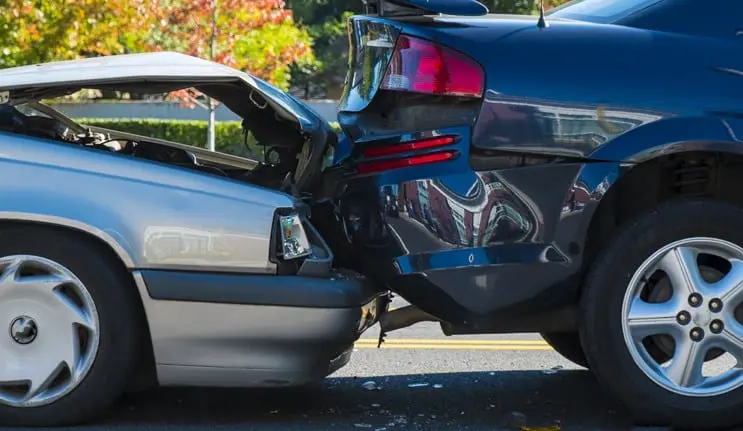
Rear end collisions are among the most common types of car accidents, and also among the most misunderstood when it comes to fault. Many drivers assume the rear driver is automatically at fault, and while that assumption is right more often than not, it is not an absolute rule. Understanding when it holds true, and when it does not, matters directly for your compensation claim.
The General Rule: The Rear Driver Is Usually at Fault
In most jurisdictions, the driver who hits another vehicle from behind is presumed to be at fault. The reasoning behind this rule is straightforward: drivers are expected to maintain a safe following distance and enough attention to stop in time if the vehicle ahead slows down or stops. If you rear end someone, the assumption is that you were following too closely, driving too fast for conditions, or not paying attention.
This presumption is strong enough that in many rear end cases, the claim resolves quickly because the rear driver’s insurer does not seriously dispute liability.
When the Presumption Can Be Challenged
The general rule is a starting point, not an absolute. Several situations can shift some or all of the fault onto the front driver, or split it between both parties.
The Front Driver Stopped or Reversed Unexpectedly and Without Cause
If the front driver slammed on the brakes for no apparent reason, such as to intentionally cause a collision or to avoid an object that was not actually a hazard, this can shift partial fault. Similarly, if a driver reverses suddenly and unexpectedly into a stopped vehicle behind them, fault can shift substantially toward the front driver.
Brake Lights Were Not Working
If the front vehicle’s brake lights were broken or not functioning, the rear driver had less warning to react, which can reduce their share of fault, since they were not given a fair opportunity to respond.
A Chain Reaction Involving Multiple Vehicles
In multi car pileups, the driver who initiated the chain reaction is not always the one who receives all the claims. Each collision within the chain is often analyzed somewhat separately, and a vehicle pushed into the car ahead of it by the force of being hit from behind may bear little or no fault for that particular impact.
The Front Driver Cut in Sharply and Then Braked
If a vehicle merges into your lane very closely in front of you and then brakes, reducing the following distance you had established, some jurisdictions will assign partial fault to that driver for creating an unsafe situation, even though the collision is technically a rear impact.
Mechanical Failure
If the rear driver can demonstrate a sudden, unforeseeable brake failure that was not due to poor maintenance, this may reduce their fault in some cases, though this is a difficult argument to make successfully and usually requires mechanical evidence.
How Fault Percentage Affects Your Compensation
Most jurisdictions use one of a few fault frameworks, and which one applies significantly changes how a split fault rear end case plays out:
- Pure comparative fault: you can recover compensation reduced by your percentage of fault, even if you were 90 percent at fault, recovering the remaining 10 percent.
- Modified comparative fault: you can recover compensation reduced by your percentage of fault, but only if your fault is below a certain threshold, commonly 50 or 51 percent, depending on the jurisdiction.
- Contributory negligence: in a small number of jurisdictions, being found even slightly at fault, such as 1 percent, can bar you from recovering any compensation at all.
This is one of the areas where knowing your specific jurisdiction’s rule matters enormously, since the same set of facts can produce very different financial outcomes depending on where the accident occurred.
Evidence That Helps Establish Fault in a Rear End Case
- Photos of the damage on both vehicles, which often show the direction and force of impact
- Photos of the accident scene, including any skid marks or debris
- Dashcam footage from either vehicle, if available
- Witness statements from anyone who saw what led up to the collision
- The police report, which often includes the responding officer’s initial assessment of fault
- Vehicle data recorder information (sometimes called a black box), which can show speed and braking just before impact in newer vehicles
What to Do if You Are the Rear Driver
Being the rear driver does not mean you have no options, particularly if you believe the front driver’s actions contributed to the accident:
- Document everything just as thoroughly as you would if you believed you were not at fault
- Avoid admitting full fault at the scene, since a more complete picture may emerge once all the facts are reviewed
- Note anything unusual, such as non functioning brake lights or an abrupt, unexplained stop
- Consult a lawyer if the claim involves significant injury or damage, particularly if you believe fault should be shared
What to Do if You Are the Front Driver
- Do not assume the claim will be straightforward just because you were hit from behind
- Gather the same documentation you would in any accident, including photos and witness information
- Be prepared for the rear driver’s insurer to look for any argument that shifts partial fault, such as questioning whether your brake lights worked or whether your stop was reasonable
- Keep records of your vehicle’s maintenance history if it becomes relevant to prove your brake lights and mechanical systems were functioning properly
Frequently Asked Questions
Is the rear driver always at fault in a rear end collision?
No, though it is the presumption in most cases. Fault can shift or be shared if the front driver acted unreasonably, such as stopping without cause, reversing unexpectedly, or having non functioning brake lights.
What if both drivers believe the other one caused the accident?
This is common, and it is exactly why documentation, witness statements, and the police report matter so much. Insurance companies weigh the available evidence to determine how fault should be allocated, and disputed cases sometimes require negotiation or, in rare instances, litigation to resolve.
Does a rear end collision always mean the front car was stopped?
No. Rear end collisions happen at various speeds and situations, including on highways where both vehicles were moving before the collision occurred.
Can I still get compensation if I was partially at fault as the rear driver?
It depends on your jurisdiction’s fault rules. Under comparative fault systems, you may recover a reduced amount even with some fault. Under contributory negligence rules, any fault at all can bar recovery entirely.
The Bottom Line
Rear end collisions carry a strong presumption that the rear driver is at fault, and that presumption holds in the majority of cases. But it is not automatic, and several situations can shift or share liability. If your case involves anything beyond a straightforward rear impact, such as sudden stops, malfunctioning brake lights, or a multi vehicle chain reaction, it is worth documenting the full picture and, for significant claims, getting a professional opinion before accepting how fault has been assigned.
Disclaimer: This article is for general informational purposes only and does not constitute legal advice. Fault determination rules vary significantly by state and country. Consult a licensed attorney for guidance specific to your situation and jurisdiction.
Last updated: September 2026. Sources and methodology: general legal principles based on publicly available traffic law resources and insurance industry practices. Verify the specific fault rules that apply in your state or country.