
Last reviewed: October 2026 · How we research: How We Research
A broken bone changes an injury claim. Unlike whiplash or a sprain, a fracture shows up clearly on an X-ray, so there is little room for an insurer to argue you weren’t really hurt. That is one reason fracture claims usually settle for more than soft-tissue claims. But “a broken bone” covers everything from a cracked rib that heals on its own to a shattered hip that needs several surgeries, and the settlement ranges just as widely.
There is no reliable public database of settlements by type of fracture, and any website quoting a precise “average broken bone settlement” is guessing. What we can do is show the benchmark that does exist, explain the factors that drive value, and give you a tool to estimate a range from your own numbers.
The benchmark: average bodily injury claims
Average auto bodily injury liability claim, 2024
$28,278
Insurance Information Institute (Triple-I)
Increase since 2015
+66%
From $17,014 in 2015
That $28,278 is the average paid on all bodily injury claims under car insurance liability policies, from minor sprains to catastrophic injuries. Fractures generally sit above that average, because they involve objective evidence, more treatment and longer recovery. A simple, non-displaced fracture that heals in a cast may still settle near or below it, while fractures needing surgery or leaving permanent damage often settle well above it. Policy limits matter too: many drivers carry only the state minimum, which can cap what the at-fault driver’s insurer will pay. For broader data, see average car accident settlements by injury.
Fracture types, in plain English
The way a bone breaks affects treatment, recovery and value. Your X-ray or CT report will use some of these terms:
- Non-displaced: the bone cracks but stays aligned. It is often treated with a cast or brace.
- Displaced: the pieces move out of alignment and must be put back, either by manipulation (closed reduction) or by surgery.
- Comminuted: the bone breaks into several pieces. It usually needs surgery and takes longer to heal.
- Open (compound): the bone breaks through the skin. It carries a high risk of infection and requires urgent surgery.
- Intra-articular: the break extends into a joint, such as the wrist, knee or ankle. This raises the risk of post-traumatic arthritis years later.
- Compression: a bone, usually a vertebra, is crushed. It is common in falls and serious crashes.
Estimate your broken bone claim
Enter your details for a rough range, based on the multiplier method that adjusters and lawyers use as a starting point. Add the at-fault driver’s policy limit if you know it.
Broken bone claim estimator
Educational estimate only. Real settlements depend on evidence, fault, insurance and your state’s law, and can fall outside this range.
What drives the value of a fracture claim
Surgery is the biggest dividing line
If a fracture needs open reduction and internal fixation (ORIF), the surgical repair with plates, screws or rods, the claim changes category. Medical bills rise sharply, recovery takes longer, and there is often a second surgery later to remove hardware that causes pain. Surgery also leaves a scar and a permanent record of the injury’s seriousness, both of which carry weight in negotiations.
Complications and long-term effects
Some of the largest fracture settlements come from what happens after the break:
- Nonunion or malunion: the bone fails to heal or heals in the wrong position, often needing more surgery or bone grafts.
- Post-traumatic arthritis: common after fractures into a joint. It can appear years later and may eventually require joint replacement.
- Complex regional pain syndrome (CRPS): a chronic pain condition that can follow fractures, especially of the wrist and ankle.
- Infection, particularly after open fractures.
- Reduced mobility in older adults: a hip fracture can mean the loss of independent living.
Because these problems may not be clear for months, settling too early is one of the costliest mistakes in a fracture case. Most lawyers wait until you reach maximum medical improvement, the point where your doctor can say how much you will recover, before making a demand.
Your work and daily life
The same fracture is worth different amounts to different people. A broken wrist for a surgeon, mechanic or musician can mean months of lost income or a changed career, while an office worker may return in a week. Claims include lost wages, and in serious cases lost future earning capacity, so the effect on your job matters as much as the X-ray.
Fault and insurance
Two factors outside your injury can limit any settlement: your own share of fault, which reduces compensation in most states and can bar it in a few, and the available insurance. If the at-fault driver’s policy is too small, your own underinsured motorist coverage may pay the difference. Try the car accident settlement calculator to see how both affect the result.
Bone by bone: what typically matters
Wrist and forearm
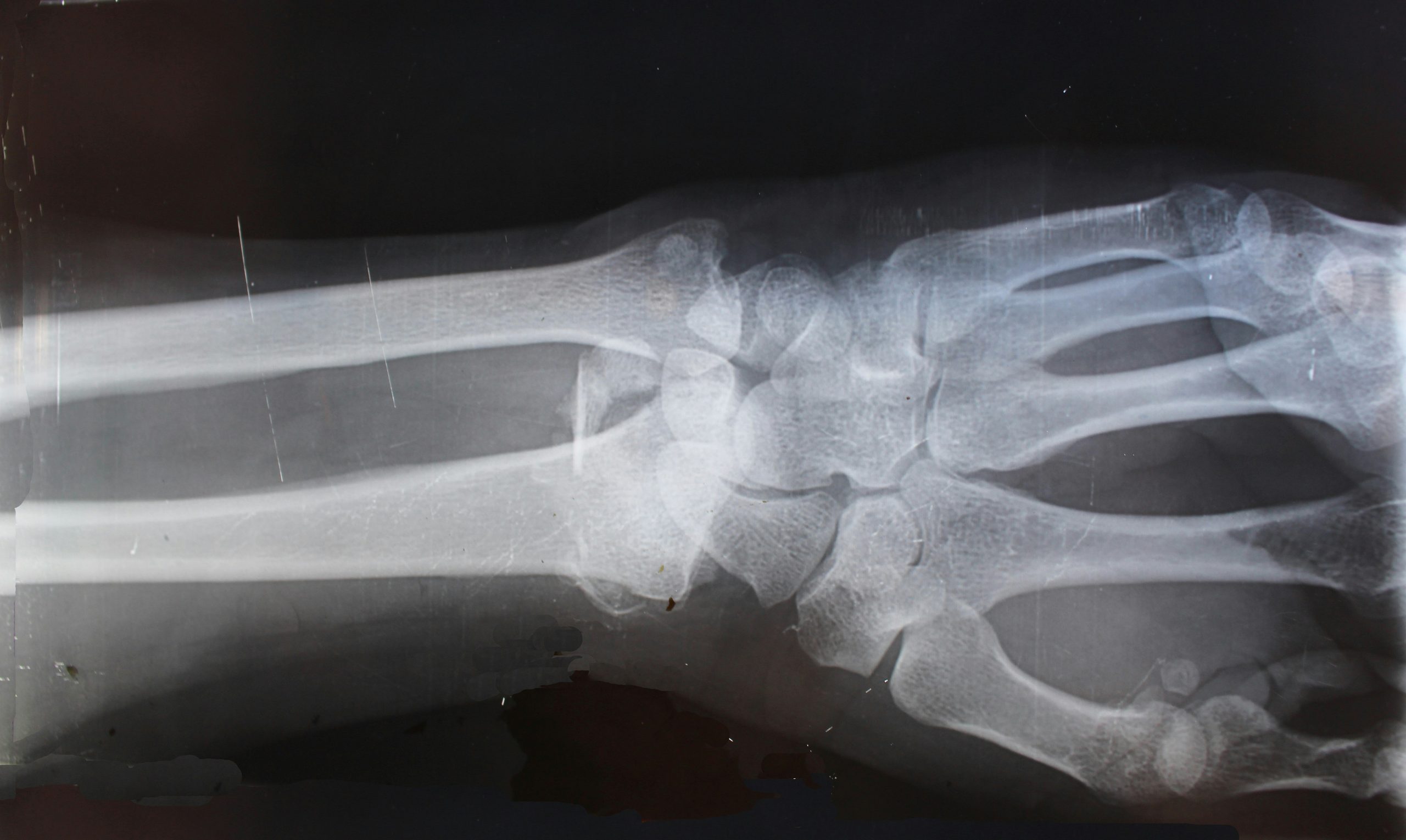
Common when people brace against a crash or fall. Breaks into the joint can cause lasting stiffness and arthritis; the dominant hand affects work more.
Ankle and lower leg
Frequent in car and motorcycle crashes and falls. Surgery is common, weight-bearing is restricted for weeks, and arthritis is a long-term risk.
Hip and femur
Serious injuries needing surgery, long rehabilitation and sometimes hip replacement. Especially severe for older adults.
Spine (vertebrae)
Can range from stable compression fractures to injuries that threaten the spinal cord. Any nerve involvement raises value dramatically.
Ribs
Usually heal without surgery but are very painful for weeks. Multiple fractures or lung complications increase value.
Collarbone
Often caused by seat belts or falls from bikes and motorcycles. Many heal with a sling; displaced breaks may need a plate.
Skull and face
Often come with a brain injury or visible scarring, both of which can raise value significantly.
Pelvis
Usually from high-energy crashes. They can involve internal injuries and long recovery, and are among the most serious fractures.
An illustrative example
Illustrative example, not a real case. James, a 42-year-old delivery driver, is hit by a driver who ran a red light. He breaks his ankle in two places and needs surgery with a plate and screws. He spends eight weeks off work and three months in physical therapy. His medical bills total $26,000 and lost wages $9,000. His surgeon notes a moderate risk of arthritis. With $35,000 in economic losses and a multiplier around 3, his claim could be valued at roughly $140,000. The at-fault driver carries only a $50,000 bodily injury limit, so James’s lawyer also claims under his own $100,000 underinsured motorist coverage. After a contingency fee and repayment of his health insurer’s lien, his net recovery would be noticeably lower. That is why it’s worth running the numbers through a net settlement calculator.
Mistakes that lower fracture settlements
- Accepting an early offer before you know whether you need more surgery or will develop arthritis.
- Skipping physical therapy. Insurers argue that missed sessions mean you weren’t really hurt, or that you slowed your own recovery.
- Giving a recorded statement to the other driver’s insurer that downplays your pain (“I’m doing fine”).
- Posting on social media about activities that seem inconsistent with your injury.
- Not documenting lost income, especially for self-employed or gig workers.
- Missing the deadline. Check your state in our statute of limitations guide.
Frequently asked questions
How long does a broken bone claim take?
Simple fractures that heal fully often settle within several months to a year of the accident. Claims with surgery or lasting effects take longer, because the value depends on knowing your long-term outcome, and cases that go to litigation can take one to three years.
Can I claim for a broken bone if I had osteoporosis?
Yes. Under the “eggshell plaintiff” rule, the at-fault party takes you as they find you. If a condition made your bones more fragile, the responsible party is still liable for the fracture they caused. Insurers may still argue about how much of your ongoing problems come from the pre-existing condition.
Do I need a lawyer for a broken bone?
For a minor fracture with full recovery and clear fault, some people settle on their own. For fractures with surgery, lasting effects, disputed fault or limited insurance, a lawyer usually adds value. Most offer free consultations and work on contingency; see how lawyer fees work.
Sources
- Insurance Information Institute: Facts + Statistics, Auto insurance (bodily injury claim severity)
- American Academy of Orthopaedic Surgeons, OrthoInfo: Fractures (broken bones)
This guide is general information, not legal or medical advice. Estimates are illustrations based on common negotiation methods and do not predict any outcome. Consult a personal injury lawyer licensed in your state about your claim.